Showing posts with label Philosophy. Show all posts

Monday, January 4, 2016

January 3, 2016::End of the day round-up


Embedded image permalink

3 Keys to Progress the Secular Community Needs in 2016
This involves removing yourself from your comfort zones. Displace yourself within circles you don’t normally frequent. Read and intermingle with queer, disabled, black and brown voices who share their thoughts, observations, experiences, and their grasp on the cultural context of their social relegation and erasure.

Books like God Is Not Great, The End of Faith, and The God Delusion are well-known, widely read, and often cited among nonbelievers. But how many have perused Godless Americana: Race and Religious Rebels, Why I Am Not a Muslim, The Ebony Exodus Project, or Writing God’s Obituary? What about books not geared towards atheism like What Does It Mean To Be White?, Sister Outsider, Critical Race Theory, or Between The World and Me? How many frequent the blogs or social media of transmen or transwomen who openly discuss their lived experiences or ex-Muslims not associated with “the establishment” that tenaciously tackle many manifestations of social inequalities like Kiran Opal, Sadaf Ali, and Heina Dadabhoy?
Watch This Short Irish Film About a Young Atheist Challenging Religious Authorities

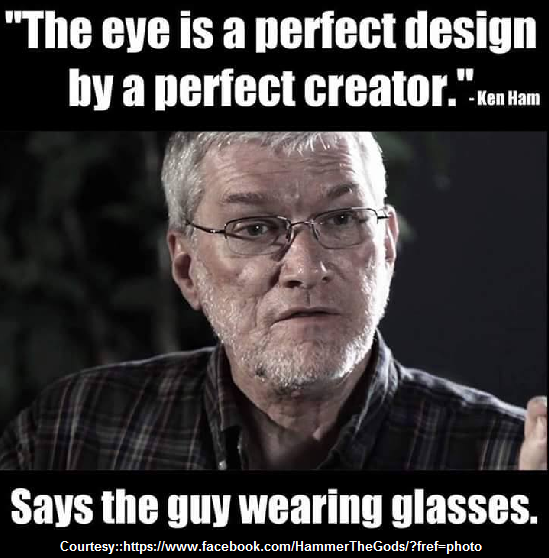
Creationism evangelist: God put contradictions in the Bible to ‘weed out’ the atheists
Embedded image permalink
 
Large Group Of Armed Militia Members Take Over Federal Building

Pakistan Censors International New York Times Article About Atheist Bloggers in Bangladesh

Sarah Palin found something else to quit — and it isn’t her asking for money

You May Be Fined in NYC for Calling Someone the “Wrong” Pronoun
America has lost any semblance of biblical thinking, and this is clearly showing up in the laws and regulations that are being established. Sinful behaviors are being applauded and protected in the courts, and those who choose to disagree with sinful lifestyles are being punished for refusing to condone or accommodate these choices. As our culture continues to reject God’s Word and do what’s right in its own eyes, we can only expect things like this to increase.

As Christians, we need to stand firmly and lovingly on God’s Word. In a culture that has utterly rejected our Creator’s words, it’s more important than ever that we stand boldly on God’s unchanging Word and speak truth,,,
What Leaving Religion Has Done for Me
As I approached adulthood, and began to meet people from different backgrounds, with different beliefs, faith faded and gave way to doubt. I’d always been a curious person, but my youthful shyness and anxiety, combined with my insular upbringing, kept me mostly isolated from the world beyond family and church. It wasn’t until I entered the workforce, and then attended junior college, that I discovered the wider world, one of dazzling variety, and found it suited my personality to a T.
,,,
Many religions, including the brand of fundamentalist Catholicism in which I was raised, lead many adherents to restrict the education of their children to a cherry-picked, often distorted or flat-out-wrong, circumscribed array of ideas, scientific theories, and historical accounts that accord with the doctrines of their faith. Many of these children remain ignorant of the wider world of human thought and history until something in their experience or personality compels them to look beyond the teachings of their youth. For example, my own dear grandmother, out of love but misguided by her piety, did a disservice to the education of her grandchildren by attempting, and in some cases succeeding, to restrict our education in this way. Her religious beliefs led to her conviction that a broad, liberal education offered too many temptations to disbelief, so she felt compelled keep us from learning anything other than that which would accord with her fundamentalist Catholic faith. As I later discovered, she was right, not for the reasons she thought. Truth, in my opinion, holds fast in the face of challenges; it does not give way as easily as error does. Each new thing I learned, then, was not a temptation: it was a window of opportunity for growing in understanding, and for replacing bad ideas with better ones. Fortunately, I inherited, and was inspired by, her adventurous side, her love of people. Over time, I encountered and fell in love with the wider world of ideas, through the people I came to meet and the broader education I eventually received.
Jehovah’s Witnesses Publication Explains How to Shun Family Members

Hospital Refuses Pregnancy-Related Care Again Because of Religious Directives
The refusal of hospitals to allow doctors to perform basic health procedures based solely on religious doctrine presents a real threat to a woman’s ability to access health care. Patients seeking medical care from public institutions should not have to worry that religious doctrine rather than medical judgment will dictate what care they receive.
This image is an excellent way to refute the common "Hitler/Stalin/Mao killed because they were atheists" fallacy
The chart breaks down every death in the 20th century, including those caused by ideology.

Communism, fascism, democracy, Ba'athism and even Catholicism all make the ideology breakdown but atheism does not. That's because Hitler, Stalin, and Mao were not motivated by atheism.

If there is an omnipotent god, one that can end disease and cancer, he's got a lot to answer for. Also, this is just a really cool chart. Yes, I am a nerd.

[Source: http://www.informationisbeautiful.net/visualizations/20th-century-death/]

Tuesday, May 7, 2013

The Craft and Philosophy of Building Wooden Boats by Hand | Open Culture

Shaped on All Six Sides, the title is quite fitting,,,they need to expand this into a full documentary!!


Andy Stewart builds boats with his own hands for life-affirming reasons. It’s a way to make inanimate objects come alive, to breathe new life into our world. But Stewart also enjoys the challenge of it all. The sea, he tells us, is the “final arbitrator” of your work.


The Craft and Philosophy of Building Wooden Boats by Hand | Open Culture

Wednesday, January 16, 2013

Scientific evidence that you probably don’t have free will | MyScienceAcademy

,,, historically speaking, philosophers have had plenty to say on the matter. Their ruminations have given rise to such considerations as cosmological determinism (the notion that everything proceeds over the course of time in a predictable way, making free will impossible), indeterminism (the idea that the universe and our actions within it are random, also making free will impossible), and cosmological libertarianism/compatibilism (the suggestion that free will is logically compatible with deterministic views of the universe).

[,,,]
As the early results of scientific brain experiments are showing, our minds appear to be making decisions before we’re actually aware of them — and at times by a significant degree. It’s a disturbing observation that has led some neuroscientists to conclude that we’re less in control of our choices than we think — at least as far as some basic movements and tasks are concerned.
[,,,]
German scientists Hans Helmut Kornhuber and Lüder Deecke discovered a phenomenon they dubbed “bereitschaftspotential” (BP) — a term that translates to “readiness potential.” Their discovery, that the brain enters into a special state immediately prior to conscious awareness, set off an entirely new subfield.

[,,,]
Needless to say it was a discovery that greatly upset the scientific community who, since the days of Freud, had (mostly) adopted a strictly deterministic view of human decision making. Most scientists casually ignored it.

 [,,,]
More recently, neuroscientists have used more advanced technologies to study this phenomenon, namely fMRIs and implanted electrodes. But if anything, these new experiments show the BP effect is even more pronounced than previously thought.

[,,,]
“At some point, things that are predetermined are admitted into consciousness,” he told Nature, suggesting that the conscious will might be added on to a decision at a later stage.

[,,,]
But not everyone agrees with the conclusions of these findings. Free will, the skeptics argue, is far from debunked,,,[t]he jury, it would appear, is still out on the question of free will. While the neuroscientists are clearly revealing some important insights into human thinking and decision making, more work needs to be done to make it more convincing.

[,,,]
Moreover, there’s also the whole issue of how we’re supposed to reconcile these findings with our day-to-day lives. Assuming we don’t have free will, what does that say about the human condition? And what about taking responsibility for our actions?

Daniel Dennett has recently tried to rescue free will from the dustbin of history, saying that there’s still some elbow room for human agency,,,

[,,,]
Indeed, Sam Harris has made a compelling case that we don’t have it, but that it’s not a problem. Moreover, he argues that the ongoing belief in free will needs to come to an end:

[,,,]
But as Dennett correctly points out, this is an issue that’s far from being an open-and-shut case. Advocates of the “free will as illusion” perspective are still going to have to improve upon their experimental methods, while also addressing the work of philosophers, evolutionary biologists — and even quantum physicists.


Scientific evidence that you probably don’t have free will | MyScienceAcademy

Thursday, August 30, 2012

NEURONS V FREE WILL | More Intelligent Life

I have always been drawn to the notion of freewill,,,partly due to the idea that I do not believe we have such,,,it is something that I am still attempting to get a grasp on,,,

Every age finds a fresh reason to doubt the reality of human freedom. The ancient Greeks worried about Ananke, the primeval force of necessity or compulsion, and her children, the Fates, who steered human lives. Some scientifically minded Greeks, such as Leucippus in the fifth century BC, regarded the motion of atoms as controlled by Ananke, so that “everything happens…by necessity.” Medieval theologians developed a different worry: they struggled to reconcile human freedom with God’s presumed foreknowledge of all actions. And in the wake of the scientific revolution of the 17th century, philosophers grappled with the notion of a universe that was subject to invariable laws of nature. This spectre of “determinism” was a reprise of the old Greek worry about necessity, only this time with experimental and mathematical evidence to back it up.

[,,,]
And then along came neuroscience, which is often thought to paint an even bleaker picture. The more we find out about the workings of the brain, the less room there seems to be in it for any kind of autonomous, rational self. Where, in the chain of events leading up to an action, could such a thing be found? Investigations of the brain show that conscious will is an “illusion”, according to the title of an influential book by a Harvard psychologist, Daniel Wegner, in 2002—a conclusion that has been echoed by many researchers since. In 2011, Sam Harris, an American writer on neuroscience and religion, wrote that free will “could not be squared with an understanding of the physical world”, and that all our behaviour “can be traced to biological events about which we have no conscious knowledge”.

[,,,]
But there is a growing realisation among some neuroscientists that looking at flickers of activity inside our heads can be a misleading way to see how our minds work. This is because many of the distinctively human things that people do take place over time and outside their craniums. Perhaps the brain is the wrong place to look if you want to find free will.

[,,,]
Stepping back from investigations of the brain, and looking at our actions in the broader context of everyday life—considering our interactions with others, for example—does not in itself provide the knock-down demonstration of free will that Dr Johnson would have liked. But it is at least a good beginning on’t.

NEURONS V FREE WILL | More Intelligent Life

Tuesday, August 21, 2012

Physics Vs. Philosophy: Really? : 13.7: Cosmos And Culture : NPR

Creation myths, being pre-scientific explanations of reality, suppose the existence of entities that could transcend it, gods that function beyond the limits of space and time and the laws of nature. That essentially takes care of the problem, if you are satisfied with a supernatural explanation for the world.

Science, of course, is not. The central dogma of science is that nature is intelligible: with the diligent application of reason we can construct explanations of natural phenomena that can be tested and falsified. Within this framework, no explanation can be deemed final: as concepts and measuring tools evolve, so do our explanations of the world.

Physics Vs. Philosophy: Really? : 13.7: Cosmos And Culture : NPR

Thursday, June 7, 2012

Technology - Ross Andersen - What Happened Before the Big Bang? The New Philosophy of Cosmology - The Atlantic

Last May, Stephen Hawking gave a talk at Google's Zeitgeist Conference in which he declared philosophy to be dead. In his book The Grand Design, Hawking went even further. "How can we understand the world in which we find ourselves? How does the universe behave? What is the nature of reality? Where did all this come from? Traditionally these were questions for philosophy, but philosophy is dead," Hawking wrote. "Philosophy has not kept up with modern developments in science, particularly physics."


Technology - Ross Andersen - What Happened Before the Big Bang? The New Philosophy of Cosmology - The Atlantic

Nietzsche and Atheism | An American Atheist

Nietzsche believed that Christianity grew out of the resentment, or ressentiment, of the weak in society – hence his famous phrase, “slave morality.” The genius of Christianity, according to Nietzsche, is its ability to take the will to power – which simply means the universal urge of man to express his spirit and impress himself upon the world – and turn it against itself.

Nietzsche and Atheism | An American Atheist

Monday, May 28, 2012

Why Atheism Demands Social Justice | Greta Christina's Blog

So I’m not arguing for any dogma, or for any specific political stance. Not here, anyway. I’ve certainly argued elsewhere for specific political stances — fervently, and many times over — but I don’t think any of them are automatically demanded by not believing in God. I’m not arguing — here, anyway — for the repeal of corporate personhood or an end to the drug war, same-sex marriage or an end to racist policing practices, globally enforced child labor laws or greater equity in funding for education, restored regulation of the financial industry or an end to government support of corrupt dictatorships. I’m not saying that, when it comes to social justice, atheists need to do any one particular thing.

I’m saying that we need to do something.

Why Atheism Demands Social Justice | Greta Christina's Blog

Wednesday, March 7, 2012

Why is religion considered philosophy? | An American Atheist

Why is religion considered philosophy? | An American Atheist

Some interesting points to consider and well thought out:

Religion has value, as many people will testify. As wellsprings of symbolism, metaphor, allegory and simile, books such as the Holy Bible and Koran clearly have tremendous value. But their value ends there, as purely aesthetic symbolism. We all agree that theologians are not engaged in active discourse to ascertain the truth or falsity of their claims, and, as I have said, the goal of a theological system is intellectual stagnancy. Sure, religious apologists abound, but the mental acrobatics required to have their systems make even the smallest breath of sense is astounding, illustrating their utter disregard for the principle of parsimony. These facts alone remove theology permanently from the realm of philosophy.

They all involve heavy discourse founded in an ultimate goal to describe the way things are, or aid in understanding. They are built upon, changed, and are adjusted based on new facts and insights—their aim is to discover truth. The same cannot be said of theology.,,,Theology represents stagnance.

From the comments:

I think that “love of wisdom” is a good definition for philosophy. I fail to see how faith and wisdom can be joined. It is not wise to believe things on faith.

Tuesday, April 19, 2011

Great names of the past who dared go against the church.

Galileo, Copernicus, Bruno, Hume, Locke, Hobbes, Machiavelli, Sartre, Voltaire, Descartes, Anatole France and Johanes Keppler; Giordano Bruno, Galileo(again,,,guess the church really didn't like him), Tommaso Campanella and Menocchio.

Philosophy Books Prohibited and Banned by the Catholic Church

Philosophers Condemned by the Inquisition

Must reads,,,I have to agree with this list, some great books

Brave New World by Aldous Huxley
Thais by Anatole France
Siddhartha by Hermann Hesse [I love this book, one of my all time favorites. Just recently downloaded as a audio and thoroughly enjoyed this format.]
Illusions by Richard Bach
The Magic Mountain by Thomas Mann
Nausea by Jean Paul Sartre
Candide by Voltaire
1985 by Orwell
Vita Brevis by Jostein Gaarder
War and Peace by Leo Tolstoy
The Stranger by Albert Camus


Philosophical Novels – Must Read Fictions About Philosophy